Drape
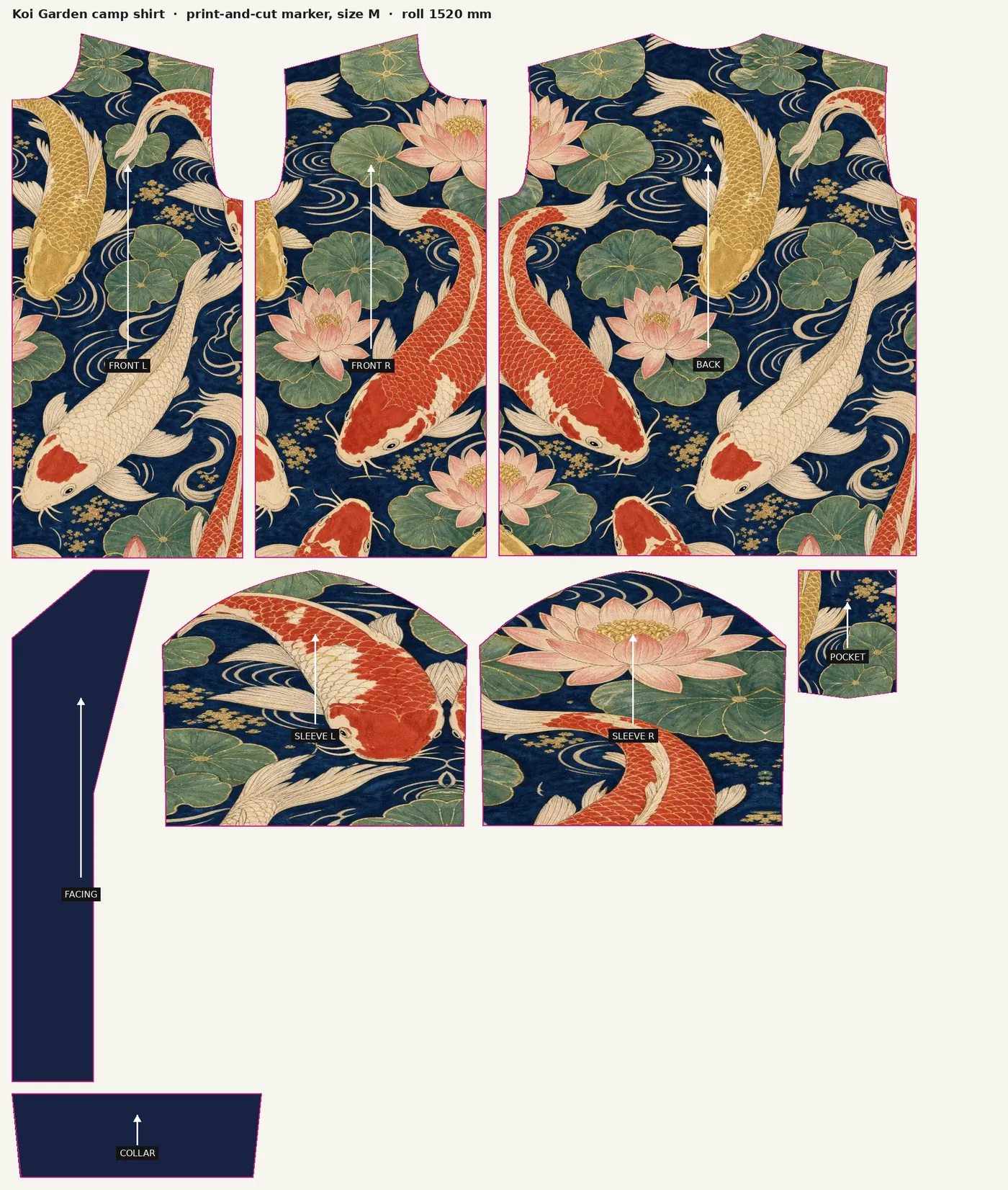
Paint a koi pond across a shirt, a sunset that runs from collar to shorts hem, a chenille letter on melton wool. Your customer sees the finished garment, photoreal. Your factory gets the print-and-cut marker, the stitch files and the plan, from the same design.
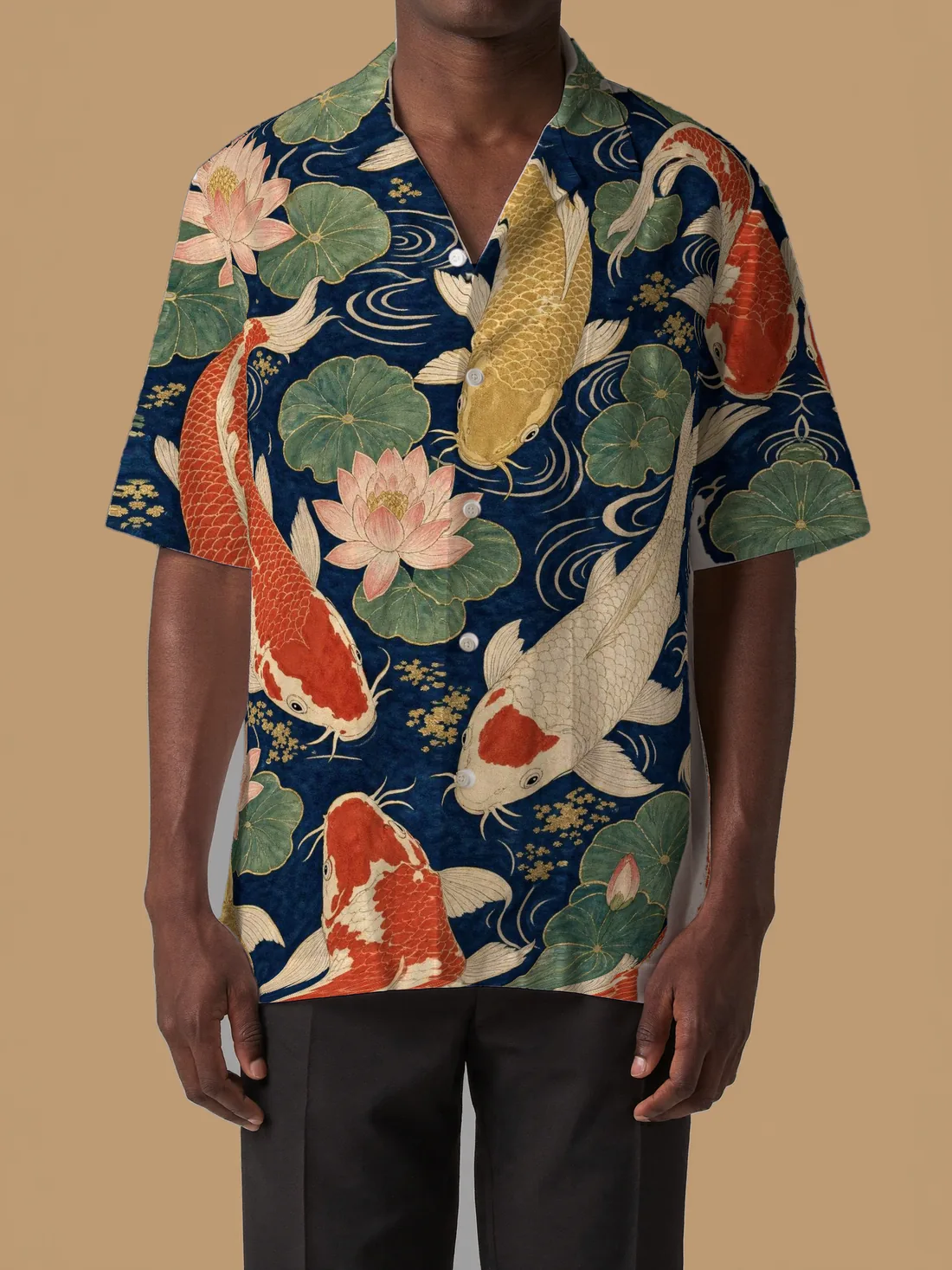
Koi Garden camp shirt, rendered from its print file on a photo of the plain garment.
Pieces that stack what the good stuff stacks: chenille over felt, embroidered patches, twill numbers, rhinestones set stone by stone, crackle-printed art front and back. Every one rendered from the files a shop would run. Hover or tap Back to turn it around, or open one in the make studio and change it a piece at a time.
Five pieces, each in two views. Wear it is what your customer sees before anything is made. Make it is what the shop receives. Placements follow the measurements print shops and jacket makers use.
A design looks right when it sits where people expect it. Imagineloom measures every placement the way shops do: from the collar seam, centred or a set distance from the centre line, at the widths printers and patch makers quote.
| Placement | Top of design | Centre | Width |
|---|
Sources: screenprinting.com, Pacific North Press, Stahls, Printful, Fourthwall and Gelato placement guides; Custom Ink's varsity guide and school letter-jacket order forms. Where guides give a range, Imagineloom uses the middle of it. Varsity sizes are trade practice, not one published standard.
Repeats are solved for each size so a whole number of motifs goes around the body, and every piece is cut from one garment-wide frame, so stripes meet at the armhole and a pocket disappears into the shirt.
The same engine builds chapter gear for the Divine Nine and the modular jacket.